A Reader’s Companion
Regency Glossary
The language of Jane Austen’s world can be wonderfully precise and sometimes puzzling. Here is a guide to the terms, customs, and objects that shaped the Regency era — to help the settings and manners of the period come alive.

Agreeable
Pleasant and willing to please; in Regency usage, a person described as "agreeable" is sociable, good-natured, and easy to converse with — a highly valued quality in company.
Almack’s
The most exclusive assembly rooms in London, governed by a committee of fashionable patronesses. A voucher to attend Almack’s was more coveted than an invitation to court, and the standards of admission were famously strict.
Assembly Rooms
Public halls where local society gathered for dancing, cards, and conversation. The Meryton assembly in Pride and Prejudice is where Elizabeth and Darcy first meet.
Attachment
A deep emotional bond or affection between two people. To form an "attachment" implied serious intent; an unguarded attachment could threaten a young lady’s reputation.

Barouche
A large, fashionable open carriage with two facing seats and a foldable hood, drawn by four horses. Its high, visible seat made it ideal for display in the park.
Banns
Public announcements read in church on three successive Sundays before a marriage, giving the congregation the opportunity to raise objections. An alternative to obtaining a license.

Bicorne
A two-pointed hat worn by gentlemen, folded so that the points form a fore-and-aft shape. Worn cocked at an angle as part of formal day dress.
Breeches
Knee-length trousers fastened below the knee, worn by gentlemen with stockings. During the Regency they were gradually giving way to long trousers for daywear, though retained for evening.
Chaperone
An older or married companion whose duty was to safeguard an unmarried young woman’s reputation in public and in mixed company. Her presence signalled respectability.
Coming Out
The formal introduction of a young woman into society, usually around seventeen or eighteen, marking her eligibility to attend balls, receive callers, and seek a husband.
Compromised
Said of a lady whose reputation had been damaged by an unchaperoned or improper encounter. A "compromise" often carried an expectation of marriage to repair the lady’s name.
Condescension
A voluntary courtesies of a superior toward an inferior; in Regency usage it could be genuinely gracious, though it often carried a patronising tone depending on the speaker.
Countenance
Facial expression and bearing, but also one’s social approval or favour. "To countenance" a behaviour was to sanction or tolerate it.
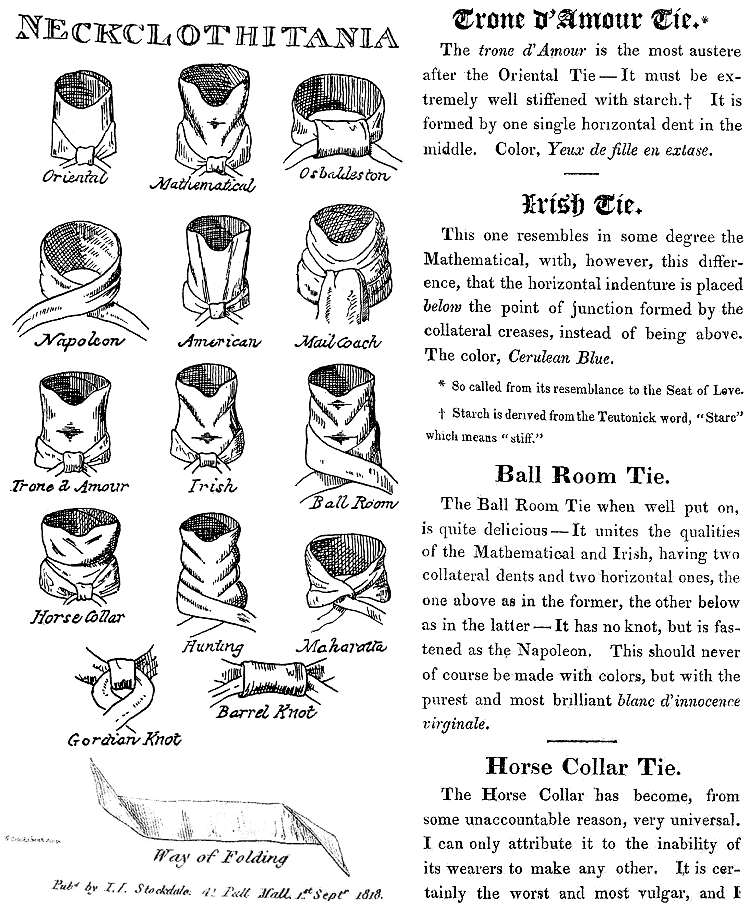
Cravat
A length of linen wound around the neck and tied in a knot, the central piece of a gentleman’s daytime attire. The art of tying it well was a mark of a well-dressed man.
Cottage
In Regency usage, a small country residence rather than a labourer’s dwelling; "ornamental cottages" were picturesque retreats on the estates of the wealthy.
Curricle
A light, fast two-wheeled carriage drawn by two horses, driven by the gentleman himself. Owning and driving a curricle signalled both wealth and sporting spirit.

Card Case
A small, often silver or filigree case in which a gentleman or lady kept visiting cards. Highly decorated card cases became a fashionable accessory, carried in a pocket or reticule and produced whenever one called upon an acquaintance.
Debutante
A young woman making her formal entry into society, typically presented at court before the Queen and then participating in the Season’s round of balls and parties.
Elopement
A secret flight to marry without family consent, often to Scotland where marriage laws were looser. Elopement carried severe social disgrace, especially for the lady.
_LACMA_M.86.266.151.jpg)
Empire Line
The fashionable dress silhouette of the era, with a high waistline just beneath the bust and a narrow, flowing skirt — inspired by classical Greek and Roman drapery.
Entail
A legal settlement restricting the inheritance of an estate to a specified line of heirs, preventing its sale or division. The Bennet estate in Pride and Prejudice is entailed away from the female line.
Estate
A landed property with its house, grounds, and tenant farms, forming the basis of a gentleman’s income and social standing.
Fencing Academy
A school where gentlemen (and sometimes officers) trained in the art of swordsmanship. Fencing was considered part of a gentleman’s education, teaching posture, grace, and self-defence.
First Rate
Of the highest social standing or quality. A "first-rate" person or establishment commanded the utmost respect; "second-rate" denoted a noticeable step down.
Jointure
A legal provision settled upon a wife to support her after her husband’s death, agreed before marriage and often a subject of negotiation between families.
License
Permission to marry without the delay of reading banns, obtained from a bishop or archbishop. A "special license" allowed the marriage to take place at any time or place.
Living
A permanent appointment to a parish as its clergyman, carrying a house (rectory or parsonage) and an income from tithes. Livings were often in the gift of a wealthy landowner.

Landau
A large, four-wheeled carriage with a two-part folding leather hood that could be raised or lowered, letting passengers ride enclosed or in the open. Its convertible design made it a prestigious vehicle for ceremony and display.
_LACMA_M.86.266.120.jpg)
Muslin
A fine, soft cotton fabric imported chiefly from India, the favoured material for ladies’ dresses. A "confirmed muslin" denoted a thoroughly fashionable young lady.
Parsonage
The residence provided for a parish clergyman, often situated near the church. It ranged from modest to substantial depending on the wealth of the living.

Pelisse
A long, sleeved outer garment for ladies, often lined and of military cut, worn over a dress for warmth and fashion when out walking or driving.

Parasol
A light sunshade on a long handle, carried by ladies to preserve a pale complexion, a mark of gentility in an age when a suntanned face suggested outdoor labour. Parasols were often of silk, trimmed with lace or fringe, and made to match a walking dress.

Phaeton
A light, high-perched carriage with four large wheels, driven by the owner. Its height and speed made it thrilling but dangerous — a mark of a sporting gentleman.
Pin Money
An annual allowance settled on a wife for her personal expenses — clothing, small luxuries, and charity — distinct from the household budget and secured for her own use.
Portion
The sum of money or property settled on a bride by her family at marriage, forming her dowry. The size of a portion heavily influenced a young woman’s marriage prospects.
Postilion
A servant who rode one of the leading horses of a carriage team to guide it, rather than a coachman driving from the box — used for heavy or ceremonial vehicles.
Presentation at Court
The formal introduction of a debutante to the monarch, the rite that marked her official entry into fashionable society. Eligibility for Almack’s depended upon having been presented.
Propriety
Conformity to accepted standards of correct behaviour and morals. A lady’s propriety was the visible proof of her good breeding and the foundation of her reputation.

Quizzing Glass
A single magnifying lens mounted on a handle and hung from a ribbon, worn or carried by fashionable gentlemen and ladies. More a prop of social scrutiny than a true aid to sight, it was used to "quiz", that is, to examine or appraise others across a room.
%2C_late_18th_century_(CH_18386541).jpg)
Reticule
A small drawstring purse carried by ladies, necessary once the slim, high-waisted fashions of the era no longer accommodated the deep pockets of earlier gowns.
Season
The annual round of fashionable social life in London, roughly from spring to late summer, when Parliament sat and noble families gathered for balls, dinners, and the theatre.
Settlement
A legal arrangement made before marriage detailing the financial provision for bride, groom, and any children. Settlements protected a wife’s fortune from her husband’s creditors.
.jpg)
Spencer
A short, waist-length jacket for ladies, often with a high collar, worn over a dress. Named after the Earl Spencer, whose coat was allegedly cropped short after an accident.

Tendresse
A tender affection or partiality for someone; a mild declaration of attachment that stopped short of a formal declaration of love.
Vicar
A clergyman serving a parish on behalf of its benefice-holder; in common speech, any resident clergyman. A respected figure in village life, often at the centre of local society.

Vinaigrette
A tiny, often enamelled or silver-gilt box holding a sponge soaked in aromatic vinegar, carried to ward off faintness or offensive smells. A lady might press a vinaigrette to her nose in a crowded ballroom or a close carriage, the fashionable remedy for a swoon.
.jpg)
Waistcoat
A sleeved or sleeveless garment worn over a shirt and beneath a coat, often brightly coloured or embroidered — a principal canvas for a gentleman’s display of taste.
Workhouse
An institution offering basic shelter and employment to the destitute, feared for its harsh conditions. Its existence underlined the era’s lack of a social safety net.


